Showing posts with label Mantis Rototiller. Show all posts

Let Us Plant Lettuce

Sunday, October 5, 2014

Lettuce Starter Plants
Oh boy...

Somewhere, Henny Youngman just groaned. Loudly. The king of the puns and one liners -- Henny's "take my wife, please" jokes had late night king Johnny Carson guffawing loudly on more than one occasion. You knew it was going to be a good show with Henny on the stage -- and he never once disappointed.

Although, he might be a tad disappointed with the title of this blog posting.

My friends -- the season of fall has fallen. It's here. Yes -- the afternoons are still quite warm. But that won't last much longer. There's a kiss of frost in the mornings. It's cold. Summer is just about at an end. And what an interesting summer it has been! But -- it's time to move on.

Garden Beds Ready for Planting
The wife that is Venus and I are expanding upon our fall plantings this year -- and there's a very good reason as to why. Have you purchased any type of green in the grocery store lately? I have. And this ultra spoiled Californian is not happy. Shelling our four bucks for two puny heads of celery is highway robbery in my opinion. Yet -- thanks to our wonderful drought -- this is the cross we are forced to bear.

As I headed unhappily home last week with my prize of two extremely small heads of celery -- the following thought crossed my mind. It went something like this: "You IDIOT! You've turned the Bird Back 40 into a shrine for everything gardening. Why aren't you growing your own lettuce? Why aren't you growing your own greens? Why are you shelling out cash for something you can easily grow in the backyard?"

Fall Greens for the Garden
My inner self is usually right. I shouldn't be running out to the store for lettuce and other greens. I should be running outside to the expansive Bird Back 40. And, in about another month, I will be.

We've never dedicated three 4X8 beds to the fall gardening effort. At most it's two -- but in some years it's just one. I'm usually loathe to tear out the heirloom tomato plants. I hold onto the summer garden for as long as I can -- and usually that's one or two months too long. I won't be making that mistake this year.

Though we could have easily started our plantings of lettuce and other greens indoors -- that tricky thing called the sciatic nerve wasn't really up to the challenge just yet. It's tough to think about future gardening challenges when the sciatic is sending "I love you" jolts into your right leg and testicle (back injuries are such fun!). But, fortunately for me, the pain has subsided to just about nothing other than the occasional ache and, better yet, the strength has returned.

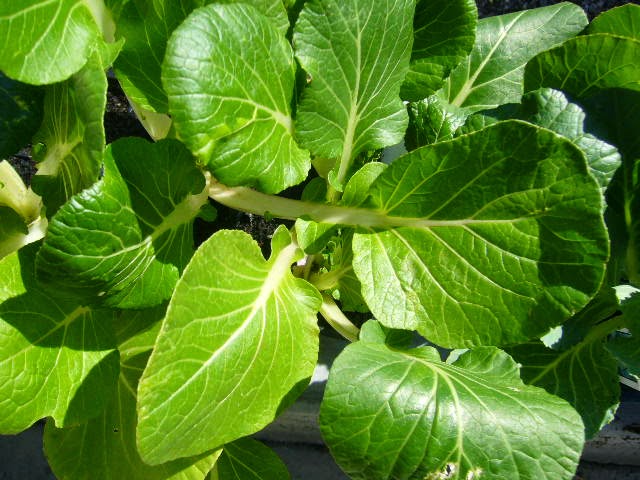
Baby Bok Choi
Hey, I used the handy-dandy Mantis rototiller to churn up two 4X8 beds yesterday AFTER I'd removed a green waste can packed with weeds and heirloom tomato plants still loaded down with green tomatoes. How do I feel today? Not bad actually. Thanks for asking. It's a clear sign that the back has largely returned to normal. But I'm still not going to do anything stupid. I don't want to go through that pain again.

This year we are dedicating one entire bed to nothing but lettuce and spinach. A separate bed will hold other items such as kale, carrots and a healthy amount of pea seeds for the spring pea crop. It's important to get the peas planted during the fall. They don't grow incredibly fast as the weather cools and the days grow shorter, but those root systems sure do get established. By the time spring rolls around? Those pea plants suddenly take off and deliver a bounty of fresh, spring greens.

Planted and Ready for Fall
The wife that is Venus and I have tried a number of varieties -- but we're partial to two of them. The varieties of "Tall Telephone" and "Mister Big Pea" not only deliver the largest peas we've ever harvested, but the tough shells stand up to slugs, snails and other garden pests who are just as interested in peas as we are. Plus -- those tough shells are good in spring stir fry dishes.

But there's going to be far more this fall than just lettuce plants, seed and peas. How about a little broccoli? Cabbage, chard and broccoli rabe? Sure! Dandelion greens? Bring it on!

Fall is here. Bring on the greens! This spoiled Californian is tired of buying what he can easily grow at home.

Don't Bother Me! I'm Gardening!

Monday, May 13, 2013

Test Bed: Bird Back 40
I dread the month of May. I really do. I shouldn't. This is my "can't miss" gardening month. I should love it to death. But, instead I dread what the change in seasons brings. Now I know how full-time farmers must feel. I must fight for my time in the great outdoors that is the Bird Back 40.

May is the month when the offers for my gardening time come rolling in. The big brother emails: "Let's spend the entire Saturday hiking up a trail and go fishing!" The sister-in-law says: "Don't forget -- It's First Communion Services this Saturday." This doesn't include the offers to attend various all day parties, weddings, birthdays and other "must attend" events.

This also doesn't include the renters who haven't paid rent for two months and then suddenly decide to move. And, of course, they leave the place in a fine mess.

Bird Tomato Garden in May-Off to a Good Start!
Don't these people garden? Don't they understand that May is the month when gardens are installed? Miss a month and you don't get it back. You can't plant green onion or carrot seeds in mid-June, people. It's too hot. Germination rates are low. Trust me on this, I've tried.

Things get so busy during the month of May that I don't even get the time to blog about it. Check the list people! It's been two weeks! That's an eternity for bloggers. Yeah, there's lots to write about! But when am I going to find the time? 

Cucumbers planted? CHECK!
When you garden as extensively as the wife that is Venus and I do, it takes more than a "day or two" to install a full summer garden. Most people don't understand this. To them, it's plant and forget. And then they wonder why the tomato plants aren't producing in August. If you desire a productive and healthy summer vegetable garden, you've got to put in the time. And that can mean hours of prep before the first tomato plant is even planted.

The latest project came just this weekend with the preparation and planting of the Bird Test Bed located in a side yard. Thanks to our recent spate of hot weather with little in the way of rainfall, the hardened clay yielded to the Mantis Rototiller as easy as hardened concrete. Guess what happens when a spinning Mantis hits concrete? If you're guessing it jumps -- good guess. But, if you're serious about this business, you've got to bear down and provide a little more muscle. Otherwise, no corn crop for those outdoor summer dinners!

Six kinds of Basil? Really? Pesto Party!
A summer dinner without corn on the cob is a crime.

The test bed located above right, by the way, may look bare now. But, trust me with this people, it's been loaded with seed. I put in the corn. Venus put in the pumpkins, squash and some spare tomato plant leftovers and a few flowers to beautify the spot as well. This is AFTER I'd spent the better part of a Sunday morning churning up the dirt, adding compost and other items that summer vegetables crave, and churning it up once more again. Then it's time to make rows -- and finally -- install drip irrigation.

Then and only then -- is it time to plant.

Flowering Potato Plants in May-Bird Back 40
Think there's any time for all-day fishing trips with a chore like this? Taking a five hour break for First Communion Services? Cleaning out a rental? Attending this event or that event? I sometimes wonder how full-time farmers drown out the noise and concentrate on the job that has to be done. Then again -- full-time growers get to dig in the dirt all week. They're lucky. I'm lucky if I get a day.

Despite the non-gardening demands on my weekend time -- things are going fairly well. While I'd like to say the job is done -- that would be a bit of a lie. There's that spring garden bed to tear out, especially since spring came and went in the space of 30-seconds this year. You know summer is serious when it doesn't give lettuce plants a chance to bolt. When those tender-crisp leaves turn brown, whither and die in the course of 48 hours? Summer's here and it's here to stay.

Eggplant-Bush Beans and Carrots! Oh My!
Not to worry, right? Because I can finish off the gardening project next weekend, right? Nope! I won't be gardening. Why not? Don't ask!

But, so far, Memorial Day Weekend is wide open!

Locked and Loaded!

Saturday, April 27, 2013

Venus and Sara: Gardening Girls Gone Wild
Hello! Welcome to yet another adventure in "Extreme Gardening." This week in the Bird Back 40? It's Garden Girls Gone Wild and guess who the lucky man behind the camera was? If you're guessing a one Bill Bird, you just might be correct. And, despite hands that trembled with excitement, I'm here to tell you a satisfying tale in both pictures and words.

Those two young ladies pictured above right played a starring role in Garden Girls Gone Wild. You may have noticed that one on the left is none other than the lovely gardening wife that is Venus. But that girl to the right may not be as familiar. Her name is Sara. And she is a charter member of GWG -- "Gardeners Without Gardens."

Heirloom Tomato Starter Plants
I would meet Sara some years back when she magically appeared from nowhere with an offer of free heirloom tomato starter plants for an annual tomato plant handout that I once hosted at the State Capitol. It was Sara who gave us the brilliant idea for our seed starting rack. And it's Sara who gave us the inspiration for what took place in the Bird Back 40 last weekend.

Yes -- we jumped the gun a tad. Tomato plant out in the Sacramento area normally takes place with the start of May. But the weather isn't cooperating. It's been downright gorgeous for most of the month of April, other than a few blustery days. But there's been no rain to speak of -- certainly no frost -- and we've been blessed with mostly warm temperatures and abundant California sunshine.

Can you blame us for getting a head start?

Return of the Mantis Rototiller
After giving the Mantis rototiller a good workout in three different raised gardening beds, I put Venus and Sara to work. And, make no doubt about it: This was WORK. It was hot, sweaty, grungy, get down in the dirt and DIG DEEP type of work. Quite simply? This is unlike any summer garden planting process we've gone through before.

It's not like we've never planted heirloom tomato starter plants before. We have. If you've read this blog a time or two, you've probably figured out that Venus and I have planted our fair share. But when it comes to the world of extreme vegetable gardening, there's always something new to try. A new approach beckoned. "Be one with the Earth, William," both Sara and Venus whispered.

They Work-I Watch
As it turns out -- I let the two gorgeous gardeners be "one with the Earth." I just snapped the photos and earned a rather brutal sunburn in the process. That's the luck of the Irish for you. Irish people don't tan. They turn a bright shade of redneck red. They peel. And then they burn themselves silly again. Insane Irish.

Last week's post related a special story of a Homer five gallon bucket that was packed with fish parts. It had fish heads. It contained fish tails. One could find fish skins, fish entrails, fish poop and all parts of a fish that people just won't pay money for. We'd let our tightly covered can of smelly fish parts sit and cook in warm sunshine for a full day before we finally popped that lid off.

Smelly Fish Parts!
What an aroma! We drove neighborhood dogs and cats wild with envy. My neighbors thought -- and still think -- we'd gone half mad. And they just might be right.

Although I always amend our raised gardening beds with proper and equal amounts of nitrogen, phosphorus and potassium every spring, Venus and I had never taken that extra step of adding additional amendments to each hole that we dug when it came to plant our heirloom tomato garden. The standing order of business had been the following: till up the garden with the Mantis, add amendments, then proceed to use the Mantis again to till everything together. The beds were then raked smooth and planting would then commence.

Venus Prepares to Plant: Bird Back 40
Venus and I would each dig a hole anywhere from eight to 12 inches deep -- place our treasured Brandywine or Lemon Boy at the bottom of the hole -- cover with dirt and move onto the next hole. It's the same step we repeated day after day, year after year. We didn't vary much. It always worked, so why mess with a good thing?

Why mess with a good thing? Because better things can be had. Sara came armed with some pretty good ideas. She's not the first person to employ this technique. She certainly won't be the last. But this was a departure from what we've done in the past.

I knew this was going to be a different gardening experience when Sara approached me with a request for a shovel. I handed her our standard gardening trowel. She proceeded to launch said trowel into orbit with a retort of something along the lines of: "Not this wimpy thing, I mean a SHOVEL!"

One Cup Liquid Fish Parts
She wasn't kidding.

Sara wasn't content or happy with digging a hole of eight to 12-inches. Sara demanded a hole two feet deep and two feet wide. Since most of my raised beds don't stand taller than 14-inches, I informed her she was going to hit some nasty hard clay at the bottom of her quest. No matter. She cut right through it. Sara and shovels are no mystery to one another.

When I indicated earlier this was real grunt, sweaty type of work, I wasn't kidding. Digging a two foot deep and two foot wide hole isn't hard. But try digging 26 of them. In hot sunshine. One after the other. See what I'm getting at? This was no vacation. By the time Sara and Venus were finished cutting through the clay soil line, my once nice and level gardening beds had been transformed into a series of sharp, mountainous peaks.

Fish Parts Added
Why dig a hole two feet wide and two feet deep? Recall that story about a Homer 5 gallon bucket full of fish parts? Those parts, plus other amendments were destined for the bottom of these holes. These had to be placed deep, lest neighborhood critters steal in during the dead of night to dig them up for a "snack."

If you once believed that those 18-ounce Red Solo Cups were reserved for one purpose and one purpose only (PAR-TAY!), guess again. The gardening girls needed something to transfer smelly and by now quite liquidish fish parts from bucket to gardening hole -- and the red solo cups were it. And so it went. The girls, who wore plastic gloves for some protection, dove into that bucket again and again and again. Ever tried swimming in liquidish fish parts? Oh, the fun we have here in the Bird Back 40!

Aspirin Amendments
Each hole demanded a cup of fish heads and fish parts. Each hole received a cup of fish heads and fish guts. Venus and Sara then topped off each hole with two aspirin, a quarter-cup of fine bone meal and a bit of amended dirt to make everything nice and level. What's the aspirin for you ask? That's a good question. You may ask. I make no promises of answering.

However, if you take a gander at this article from Science Daily -- the aspirin supposedly adds to a plant's immunity, thereby reducing the need for pesticides to control bad bugs and bad fungal diseases. Heirloom plants are unlike their cousins, the hybrids, in that they are highly susceptible to many bugs and fungal diseases. I still think it's a bit odd to place two aspirin next to the root ball of an heirloom tomato starter plant, but I'm willing to try anything once I suppose. As for the bone meal? It's high in phosphorus, which tomato plants need to survive and thrive.

If you're asking why we didn't throw the kitchen sink into the bottom of those cavernous holes, you may ask.

The final step: Planting
With holes dug, fish parts, aspirin and bone meal distributed, it was now time to get down to the task of why we gathered in the Bird Back 40 on this particular day: It was time to plant our leggy heirloom tomato plant starters. Those leaf sets that I had lovingly cared for during the seed-starting growth process last winter were clipped and tossed aside. Into each hole went a very long and skinny starter plant, with a few leaves remaining at the top.

Tomatoes are one of the few vegetable plants that will develop additional root systems. The stem will actually take root, provided you plant it deep enough. And two or three sets of root systems are better than one as the old saying goes.

Sara in Her Element
Why go through this process for a simple tomato plant? Because Sara and others have promised this particular method of planting will result in end-of-season stems that are as thick as small trees. Why do the stems get this thick? They are needed to support the plant because it's busy producing a whopper of a heavy tomato harvest.

That's all the argument Bill Bird needs. Please bury me in various colors of heirloom tomatoes people and leave me in heavenly peace. One part of the summer garden -- the most important part some would say -- is now in. Bring on the peppers and basil and other summertime bounty. The job of planting our summer garden continues.

Garden Girls Gone Wild approves of this message.

Dream a Little Dream

Tuesday, June 14, 2011

Corn Skewers, Duh!
"Dream on Bill Bird, Dream on!" Those would be the somewhat facetious words of the wife that is Venus as I pondered a recent purchase in our nearby Safeway Supermarket. As you can tell from the photo to your right? I did make that purchase.

"Are you thinking about using those corn cob holders on our corn crop this year darling," she questioned in a teasing sort of way. After all -- last year's complete and total corn crop failure was still in her mind (and mine as well I must say). There would be no fresh corn from the backyard last year -- just the nearby Farmer's Market.

It's a complete and utter failure that I blamed on 49ers Quarterback Alex Smith -- and no -- I still haven't changed my opinion on this. Sure the weather was crappy. But Alex was even crappier.

Enough said on the subject. I could fill blog volumes on this particular item. We won't go there. We will instead focus on happier things.

Like, corn for example.

2011 Fresh Corn Crop!
The so-called "test bed" is once again in use this year in the Bird Back 40 -- although it is a tad smaller. This is what happens when you start claiming corners and sides of said bed for additional fruit and citrus tree plantings. Still -- the remaining plot was amended dutifully earlier this spring with compost and fertilizers -- worked deep into that hard clay bedrock that is the Bird Back 40.

The Mantis Rototiller is indeed an amazing tool to have when tackling jobs (did someone say tackle?) such as this. This is our third year for using the test bed. And with each year -- I'm able to churn up and reclaim another inch or two of soil that had been hard pan.

As you can tell from the photo above -- this year's corn crop is indeed off to a rousing start. Despite the less-than-perfect spring weather, the first two rows are well on their way. Venus and farmer-in-training Marquitos Stromberg added a third row two weeks ago, and that has already popped out of the ground. I added the final three rows this past weekend.

That's six delicious rows of Golden Bantam Corn if you're counting -- ten to eleven plants per row. Do you think that's enough for your average backyard plot? Venus has also planted three to four rows of a baby corn variety in another bed on the other side of the Back 40. If you place these varieties too close to one another -- they will cross pollinate -- leading to a mutant and non-edible mess.

2009 Corn Crop
This is a lesson we learned during our first year in the test bed. This is why we call it the "test bed." It also has other names that I shall not share at this time because this is a family blog.

And yes -- if you're wondering -- Golden Bantam would be considered an "heirloom" variety. The original strain of Golden Bantam was introduced by W. Atlee Burpee in 1902. These stalks will grow to a height of five to six feet -- and produce golden yellow ears that are five-to-seven inches long.

The taste you ask? Well -- there's a reason why heirloom varieties like Cherokee Purple tomatoes and Golden Bantam corn stick around for this long. Sure -- larger and more productive strains of yellow corn have been hybridized since Burpee first offered the Golden Bantam.

But nothing beats that old world taste -- and that's what you get with each lip-smacking and crunchy ear of Golden Bantam corn. It's also a good canning variety plus the ears freeze well -- which is another reason for its usage.

Golden Bantam Corn at Three Weeks
Once again -- our test bed has been reserved for "a little bit of everything." There are some tomato plants that I've stuck in there -- but not nearly as many as in past years. The bed is also home to watermelon, cantaloupe and pumpkin crops. It's a large side yard of the Bird Back 40 -- so the vines have "room to run."

As for the corn cob holders -- it was about time that we invested in something new. Most of our original corn cob skewers were of the heirloom variety themselves. In other words, they came from mom's house. They were -- how do you say -- a tad worn.

My hope and dream is that the Birds bounce back with the kind of corn-y year that we experienced in 2009 -- our first year for the test bed. Corn crops grew large and lush and delivered some tasty offerings before the mutants moved in and took over.

I'd like to say that last year was just an aberration -- but then again -- Alex Smith is still the starting quarterback for your San Francisco 49ers.

That's enough to scare any backyard farmer.

Snip, Snip, Snip!!!

Sunday, May 1, 2011

Smile! It's SPRING!
Let the record show -- on this day -- May 1st, 2011 -- Mother Nature finally delivered the most beautiful, warm, wonderful spring day of the year. It's been a long time coming. Yesterday's windy conditions down here in the North Natomas riverbottom frustrated me to no end. But today? Today my friends -- as the photo will show -- today is a day for wide, colorful smiles.

Let the record show that -- on this date -- Bill & Venus Bird will fire up the Mantis Rototiller and get to work on amending the test bed for the 2011 corn, melon and squash crops. But it's a little early yet. The Mantis makes quite the racket. I'll let the nearby neighbors enjoy a bit more Sunday stillness before I intrude upon their Sunday quiet.

In the meantime -- big things are literally jumping out of the ground in the Bird Back 40. If you're a fan of home grown fruit? It's a sight to behold. The fruit tree trimming practices that Venus and I learned from City of Folsom Arborist Ken Menzer last year have been put into practice. The resulting yield has been quite surprising to witness.

He was right.

Flavor Finale Pluot Tree
There are two things from Ken's class that stick out in my mind. The first? "Fruit trees grow very fast," he instructed. That surprised me because it seems like I've been waiting eons for my backyard fruit crops to produce in the eye-popping numbers that I desire. The second? The second tip he delivered, which Venus and I have also put into practice, is to fertilize fruit trees on a monthly basis.

This doesn't mean you're required to get on your hands and knees with hoe in hand and scrape fertilizer into the soil around a base of a tree either. Nope -- his instruction was to take a small handful of fertilizer and just toss it under a tree once a month. In my case? I use a set of measuring cups that I keep in the garage. Each tree gets a 1/4 cup of fertilzer or less once a month without fail.

Pluots on the Flavor Finale Pluot Tree-Year 2
The advice that he delivered -- to prune every fruit tree branch after it has developed five leafsets -- plus fertilize monthly -- has produced some impressive results as you might be able to tell from the photo to your upper left. That, my friends, is the Flavor Finale Pluot tree that wifey and I planted during the 2010 bare root planting season. It had exactly three branches on it.

Today? A little over a year later? The Flavor Finale Pluot has about 30 branches. There is fruit all over the tree. It is growing like a weed -- as are the nectarine trees that we have planted out in the front yard -- in a small corner tucked against the home. The next door neighbor -- a retired farm-hand who worked peach groves all his life in Yuba and Sutter Counties -- warned me that "it would never work."

Today -- those trees -- also planted about one year ago -- trimmed and fertilized faithfully -- are approaching seven feet in height. Each of the three trees is loaded with nectarines. Unlike the peach trees planted in the Bird Back 40 -- which are suffering from a terrible bout of peach-leaf curl this year (Farmer Fred Hoffman has an excellent and informative posting on peach-leaf curl here) -- the nectarines are healthy and loaded with new branch growth. The neighbor -- who worked commercial farms for most of his adult life -- is quite fascinated with the growth show that is taking place and is considering his own patch of home-grown fruit.

Nectarine Trees-Frontyard Orchard Culture
See? This insanity cannot be cured.

Although the pluot is not part of a grouped Backyard Orchard Culture concept planting -- I am still treating it as if it is. This means trimming the tip off each branch after five leaf-sets have emerged. The Flavor Finale Pluot has reacted to this trimming party by growing at least two-to-three new branches from each branch that has been pruned. Once the new branches have unfurled to five or six leafsets -- they too are pruned back -- resulting in a tidal wave of branch growth.

I have already started the process of pruning the pluot for the first time in 2011. The new branches that emerged with the onset of a cold spring earlier this year have already unfurled to five or six leafsets. The trick to this pruning method is to prune at least three or four times per spring, summer and fall season. It's not hard -- but it does require an hour or so of time to locate all of the new growth and prune it back. Since the new growth is green and pliable -- it doesn't take much effort. You don't even need gardening shears. Fingers and fingernails work quite nicely.

New branch (left) emerging from trimmed branch (right)
I am not quite sure if the pruning or fertilizing routines are the reason behind this rapid and sudden growth. Like everyone else who prefers home grown fruit -- I can tell you that some trees are doing well and others not-so-well (see: peaches). But I can tell you that every tree that has been subjected to this trimming and fertilization effort has resulted in rapid, eye-popping growth. There's not a failure among the bunch.

So -- if you love it? WHACK IT! Remember? With each new branch that emerges during a summer of pruning? That's just one more branch that will result in a boatload of fresh fruit the following year.

That Man Smells Like Manure!

Sunday, April 17, 2011

Does Someone Smell Cow?
Step back ladies -- and please try to control yourselves. The Don Juan of bovine meadow muffins is in the house -- and as the photo to the right will clearly attest -- the "defcon of reekness" level stands at four.

Thanks to a weekend of warm weather and bright sunshine in North Natomas -- I'm pleased to announce that the 2011 summer garden season is now "on." Oh sure -- it's mid April. I'm not forgetting the calendar. But when two straight wam weekend days fall into your lap - a gentleman "takes advantage."

Think about it for a minute. In a lot of ways? Gardening is like sex. "How so Bill Bird," you inquire? Let's look at the facts, shall we? A day of gardening leaves you hot -- sweaty -- dirty -- tired -- spent and in desperate need of an ice-cold beer.

What other activity leaves you feeling in such the same manner?

I rest my case.

"Work It" With a Wheelbarrow!
If you're seriously insane -- I mean -- serious about gardening -- you just can't "plant seed" and forget about it. Oh no -- there's a lot that comes before that magic moment. First and foremost? You need to prepare for it. You need to "work it" so to speak -- as in work the garden beds before planting.

There are six main 4X8 gardening beds in the main part of the Backyard of Bird. There -- you will find the now infamous "V for Venus" beds. I'll be honest. After a long and frustrating winter -- a lot of the beds were covered in weeds. Call it our winter of neglect.

Fortunately? These are raised beds filled with loose soil planter mix. No matter how big the weeds get? They're fairly easy to pull out -- roots and all. And if you don't get it every last part of each root? The Mantis Rototiller will take care of the rest.

The Mantis needed yet another tune-up before I got started this weekend. Despite my efforts to drain out the old gasoline from last season and replace it with something new -- it wouldn't fire up the way I wanted it. It would run for a minute or two and then die when I gave it the gas. Know what that means? It means another trip to Bill Knight and the Lawn and Mower Repair shop in Elverta.

Bill knows his two-cycle engines.

Mantis Rototiller in Action!
After a standard $25 tuneup? Ye olde Mantis was running like a top again -- ready to tear into those beds with abandon. Each bed received three bags of top quality manure -- and I say that in jest -- because when is the last time you ever heard anyone use the line "top quality manure?"

It's cow-poop folks. Plain and simple. It comes from the back end of -- well -- you know.

After a less than satisfactory experiment with other forms of compost last year -- I switched back to the simple one-buck-a-bag variety found at your local Home Depot. Why fiddle with something that works wonders? Some of my best summer vegetable gardens have resulted from the use of the cheapest form of steer manure compost -- so why fiddle with something that works?

Sure -- I've tried better forms of compost. I've tried the organic variety. I've shelled out $20 for a bag of the Fox Farm product. Guess what? In my short experience? The buck-a-bag Home Depot stuff just works better. And there's nothing like the feeling of ripping into a bag of smelly steer manure compost -- only to find that it's rich with earthworms. That's like hitting the garden jackpot.

Amended bed before rototilling
I managed to till up four different beds this weekend -- which is a record for productive output. The main 4X8 beds each received three bags of steer manure compost -- which also comes with an ample supply of potash (potassium). I also experimented some additional nutrients for the beds in the form of organic bone meal -- which is high in phosphorus. If you're as insane as I am about heirloom tomatoes -- you'll find that they need equal amounts of three nutrients to do well: Nitrogen, potassium and phosphorus.

If your garden is lacking in any one of the three? It can affect production. You can also work in far too much of a good thing -- which I discovered last year when I experimented with chicken manure compost. However -- I am returning to a nutrient recipe that has served me well in the past. My "method of gardening madness" is to till up each bed with the Mantis -- add manure, bone meal and other pelleted nutrients -- and use the Mantis a second time to mix it in with the existing soil.

After splashing each bed with a fine spray of water (this keeps the wind from blowing half the soil away -- which is a real problem in the windy riverbottom) -- the end result is a dark -- rich soil that is ready for planting. And so -- this is when the magic moment comes. It's time to plant.

Amended "V for Venus" planter bed
I'll be honest with you -- I jumped the gun a tad. The heirloom tomato starters that I have been babying in a back room through most of the winter months are now in their permanent location. Yes -- I'm taking a gamble here. Yes -- there's still the chance for another cold storm or two. Yes -- most serious growers wait until the END of April before they dare plant anything.

In my case -- however -- it was time. The long and lanky heirloom starters were seriously rootbound. Worse yet? A normal spring day of warm weather was enough to dry them out completely. My only options were to transplant the starters into larger containers -- or plant out now. I chose the latter. It's a gamble -- yes it is. But the long range forecasts look promising.

Tomato plants can withstand a warm spring deluge. In fact -- I've found that they tend to enjoy it. I've seen plants knocked flat by warm spring downpours -- only to watch them spring back stronger than ever a few days later with nary a trace of disease. Warm spring rain doesn't bother me. A cold snap followed by cold rain and more cold weather? That's different. It should cause concern.

Raggedy heirloom tomato plant starters

If we're lucky? The wife that is Venus and I will be enjoying vine ripened tomatoes by the end of May or in early June. This is providing the weather cooperates. After experiencing a colder-than-normal summer last season -- I know that the weather rarely cooperates in these cases.

But -- every once in a great while -- a squirrel finds a nut. The heriloom tomatoes are in. The wife and I smell like we've been rolling around in meadow muffins all weekend long. There is no turning back now.

As for me? I need a beer -- and a shower.

Fine Gin Grown Here!

Tuesday, September 28, 2010

The fall vegetable crop is now planted and coming up nicely!

Well -- most of it is planted anyway. The wonderful wife that is Venus still has a few more rows left to go in one of the raised beds -- but by this weekend? We're hoping to put the finishing touches on a gorgeous fall crop of nothing but nutritous and wonderful things for the body.

Yes -- that includes the finest gin available in a plastic bottle! And if you don't think you can't grow fine gin in a plastic bottle next to Baby Bok Choy or red-leaf lettuce -- well -- you haven't witnessed the wife's wonderful green finger.

Everything the woman plants from seed? It grows. It not only grows -- it grows EXTREMELY WELL. So -- although the "gardening experts" might tell you that you can't grow the finest gin that comes in a plastic bottle from seed -- well -- it doesn't hurt to try -- does it?

We'll let you know what happens around Christmas. If you find that Bill & Venus Bird are involved in a very MERRY holiday -- you'll know that our little experiment worked just fine.

What grows well in the Sacramento Valley during the fall and winter months? Pick a crop! That's the wonderful thing about our area. As summer slowly transitions into fall -- it brings a wealth of "growth" opportunities.

As for the wife? She likes to plant from seed. She won't turn her nose up at some starter plants -- and we do like to support our local nurseries -- so you'll always find us with starter plants of broccoli, chard or one of many wonderful lettuce selections (lettuce tends to extremely well in our North Natomas Back 40).

But for most selections? Venus starts -- and ends -- with a packet of seeds either purchased locally or from one of many seed providers scattered about the country. We happen to be partial to an operation called Pinetree Garden Seeds. They're not local. Not hardly. They happen to be located in a small section of New Gloucester, Maine.

But we keep going back to them for a simple reason: Everything that we buy from them -- works. They've never let us down. I've never opened one bad package of seed provided by Pinetree Garden Seeds -- and that's the honest truth. Plus -- they're cheap -- which doesn't hurt.

Still -- if you're undecided as to what you'd like to plant in your backyard for the coming fall season -- you can't go wrong with the handy-dandy Farmer Fred Hoffman Planting Guide. Plus -- he also blogged about his favorite fall selections not all that long ago.

But he didn't have fine gin that comes in a plastic bottle on his list -- remember that much.

The first step we always take in planting our fall garden is recharging the raised beds that held part of our summer garden. The second step? Chasing "that damn dog" away from the raised beds that have just been recently amended. Bandi seems to have this belief that she was a Mantis Tiller in a former life. Solving that little "digging problem" has been problematic to say the least -- although I've found a gadget called The Scarecrow to be quite effective (it shoots a stream of water at anything that crosses its path).

If only I had ten of them...

We are recharging the beds with some different materials this fall. Venus and I recently switched to a new form of compost called "Paydirt" that we purchased from Capital Nursery in Sacramento. This is a little more expensive than the cheaper forms of Steer Manure Compost that we had been purchasing from Home Depot -- but we decided to make the switch for a number of reasons:

1. This is a better form of compost for our raised beds. We use these beds a lot. Treat them with good form of compost and they will treat you well in the form of vegetable crop production.
2. Paydirt Compost is an organic form of compost. We're not 100% organic mind you -- and may never get there -- but we try!
3. The illegal pot growers already snapped up the really good Fox Farm Compost!

Illegal Pot Grower: "We did not! I mean -- we're not growing anything!"

Me: "Then why is your name Illegal Pot Grower?"

Illegal Pot Grower: "DOH!"

The results -- so far -- have been better than we ever could have hoped. Every single one of Venus' seed rows has sprung to life -- and the starter plants that we purchased are also doing remarkably well.

Broccoli and Swiss Chard starter plants
We're not done -- of course -- not by a longshot. Venus and I will begin the process of planting seed garlic and onion starts next month -- and there's always another row to plant or another experimental vegetable to try. Who knows? We may put the test bed to work this fall instead of reserving it for "summertime use only."

I know I can count on one thing: The seeds that Venus planted earlier this month will result in a nice salad serving for ten-to-15 guests for our annual family Thanksgiving celebration. The Baby Bok Choy serves as a wonderful green to brighten those warm soups in the dead cold of winter. And there's nothing like fresh swiss chard and spinach in a turkey taco salad dinner.

We're not writing the summer garden off quite yet either. As long as we have heat -- we'll get tomatoes. There's still another watermelon to harvest -- the bell peppers aren't quite done yet -- and we might be able to squeeze another jar or two of pickles from the cucumber plantings.

But as for fall? The greens are jumping!