Showing posts with label Butte County. Show all posts

The Legendary Duke Avocado, Part Deux

Sunday, October 28, 2012

Duke Avocado Trees: Old Oroville Depot
An avocado tree that can not only withstand freezing conditions but laugh in the face of a one Mr. Jack Frost himself? An avocado that offers a higher oil content than the Hass? An avocado variety that can withstand root rot conditions that have doomed other trees in the Bird Back 40? Say it ain't so! I must have one!

Consider this a followup to a journey that started many moons ago during that one night where I could not sleep. I was desperately seeking Susan, err, for an avocado variety that could withstand our colder than cold Northern California winters. It was that night that I discovered the Duke, its ability to withstand freezing winter temperatures and its interesting history, which I wrote about several months ago.

Introductory Garden: Old Oroville Depot
The posting about the Duke has generated the largest response from readers since Venus and I painted a beehive Hello Kitty pink and proceeded to get stung silly while attempting to become amateur beekeepers. That's a good word: Amateur. Another good word is foolhardy. But I digress.

The quest to grow an avocado tree in our micro-climate cold North Natomas Back 40 by reaching back into Northern California history to grab a bit of the past has been an interesting journey indeed. My singular attempt to bring this 100-year old variety called the "Duke" into the present day has now grown to involve the efforts of several growers, some connected with California Rare Fruit Growers (CRFG) and some not.

First Graft Attempt: FAIL!
When I signed off on the last posting, I was attempting to graft Duke scions onto three different avocado root stocks provided by David Johnson, an avocado aficionado who has painstakingly turned his Waterford backyard into a rain forest-like shrine to all things citrus. If you think "you can't grow that here," David is probably growing it, and growing it successfully.

And now? The rest of the story.

I suck at grafting. I really do. It's a skill that I've not yet acquired, despite some early grafting success that I experienced last spring with my pluot and plum trees. Grafting stone fruit scions to other stone fruit trees is MUCH easier than grafting citrus, a painful lesson I would learn after watching every single avocado graft I attempted curl up, turn a none-too-pleasant shade of black and DIE.

After watching my repeated grafting attempts fail and fail and fail again, nearly destroying three avocado root stocks in the process, fate would smile upon me rather fondly. A fellow avocado NUTCASE like me learned of my struggles and advised: "Contact Sam."

GRAFTING: IRANIAN STYLE

Venus Beneath Monster Duke Avocado Trees
"Sam" is actually a nickname for a one Samad Janfeshan, who lives in a quiet Arden Oaks Vista neighborhood. I would later come to find out that Sam is quite famous, provided one of your primary languages is Persian. I am told he still takes phone calls from all areas of Europe and the Middle East thanks to his knowledge and experience in the field of all things horticulture. As I would come to find out, Sam employed a highly successful grafting technique learned while tending the family ranch in Iran.

How did "Sam" get from an orchard in central Iran to Sacramento? That's a story even more interesting than his grafting technique and a backyard that is a shrine to his marvelous grafting abilities. Like many Iranian citizens, Sam was fortunate enough to attend our institutions of higher education in California. Unfortunately for Sam, during this particular period in time, things got a little crazy in his home country.

Ayatollah Khomeini
It was during this time that the Shah would be overthrown, the U.S. embassy would be raided and hundreds taken hostage and a figure known as the Ayatollah would come to power. Overnight, a once-staunch U.S. ally in the Middle East would become decidedly anti-American. Sam, who watched events unfold from the safety of California, decided he wanted no part of the new direction his country was headed in and worked to become a citizen of the United States. He would give up the farm, but never lose his love for fruit trees and other horticultural endeavors.

I am more than fortunate to be steered in this man's direction. He saw the troubles I was having. He scolded me silly for my amateurish grafting attempts and proceeded to teach me a skin-grafting technique that I've never seen performed before. It's a technique that has resulted in multiple plum, mulberry and other fruit tree offerings that grace the family backyard. Yet, you will find none of these varieties at your local nursery. You will, however, find them in Iran.

Duke Avocado Leaves: Brilliant Yellowish Green
It suddenly struck me that if Sam could successfully grow fruit trees native to Iran in the backyard of his Sacramento home, he could probably solve my grafting problems with the Duke Avocado. Call that a rather fair assumption. Every graft Sam attempted survived. Three sorry looking avocado root stocks have been transformed into legendary Duke Avocado trees.

Not satisfied with his success on three trees, additional root stock was procured from a long-time member of the Sacramento Chapter of the CRFG where Sam again demonstrated his successful grafting skills. Additional Duke scion wood was also farmed out to David Johnson and other CRFG growers who are slowly bringing this heirloom avocado tree back to life.

THE BIG TEST

Freshly Harvested Duke Avocados
Although I've uncovered a lot of information about the legendary Duke line and discovered old Duke trees in locations scattered throughout Butte County, one big piece remained missing from this equation. What does a Duke avocado taste like? Was this variety abandoned so long ago because it tasted like the inside of one of my old tennis shoes? I had always strongly suspected that the Duke was abandoned by commercial growers because it was a poor shipper. But I couldn't prove that. Not yet anyway.

I would have to wait for Duke season that finally arrived this month. Duke trees are alternate bearing, which means in some years you get a heavy crop of avocados and other years the pickings are slim. 2012 turned out to be one of those lean years. As I gazed into the treetops of the Duke trees in the Oroville Depot Introductory Garden earlier this month, I found what I was looking for.

Fruit Harvesting Basket for Fat People
It was also 30 feet off the ground. While I was once a champion tree climber in my youth, quite a few years have passed since then, and considerable pounds have been added to my once wiry frame. I wasn't about to scramble up a tree -- avocado or no avocado. Fortunately I had come armed with a fruit harvesting basket like the once you see pictured, plus a handy dandy telescoping handle that put the Duke fruit well within my reach.

I can't begin to describe the joy and satisfaction I felt as I pulled that very first piece of fruit off this heirloom tree and brought it slowly downward. Months of reading, research and phone calls had finally resulted in this moment. Upon grabbing my first Duke avocado, I brought it up close to my ear and gave it a vigorous shake. This was the final test. If this was truly a Duke avocado, the seed would be loose inside the piece of fruit. You can imagine my smile when I heard that tell-tale "thunk-thunk-thunk" sound as the seed bounced around inside.

Loose Seed Pit: Duke Avocado
That tell-tale sign of seed thumping plus the thin green skin confirmed, finally, that this was the Duke Avocado. What was once lost had been found again. After pulling 20-25 avocados from the largest of the two Duke trees in the Oroville Depot, I departed for a nice lunch in the Western Pacific Brewing Company before embarking for home.

I WENT THROUGH ALL THIS TROUBLE FOR THIS?

The first true taste-test of the Duke avocado would take place later that night as I presented the Duke haul to the avocado snob that is the wife that is Venus. The wife that is Venus knows her avocados. The wife that is Venus also has her own avocado TOOL for removing seeds and skins from the precious fruit. I would come to discover that this tool is useless with Duke avocado. It's designed for working with thicker-skinned varieties like the Haas, Mexicola and Fuerte.

Duke Avocado: Right-Hass Avocado: Left
As I watched Venus slice into the first of the Duke fruits, the first wave of doubt washed over me. This wasn't a soft, smooth, creamy avocado. Not hardly. The first taste of the Duke fruit confirmed the worst of my fears. It featured the consistency of a crunchy apple. It was also quite tasteless. What had gone wrong? Had I picked it too early? Was the Duke abandoned because it had the consistency of a rock?

Color me disappoint.

It was a few days later when I received a message from gardening friend Nels Christensen, who I had gifted with four Duke avocados. He messaged me to tell me that he was in the process of making guacamole. "GUACAMOLE!" How does once make guacamole with rock hard avocados? Nels messaged back to inform me that the Dukes had softened to the point to where they were pliable.

Creamy Delicious Duke Avocados
As it turns out, my worst fears were nothing to worry about. Duke fruit does not turn soft and ripen on the tree. Duke avocados are quite hard at harvest. But after picking? They ripen VERY quickly. In two short days my collection of apple-consistency avocados had developed the consistency of a squishy sponge. They were more than ready for consumption.

I began to understand why the Duke had been labeled a "poor shipper." It ripens so fast at harvest, and turns so soft, that it would be incredibly difficult to keep these avocados from spoiling in large numbers. Growers would have been required to move boxes of fruit from field to store bins within a day or less. This effort also would have required consumers to snap up all of the fruit before it could spoil. And as I would come to find out, Duke fruit will spoil quickly once it's been harvested. That window of 48-72 hours isn't much.

THE FINAL PAYOFF

My First Duke Avocado Harvest
So -- what does a Duke avocado taste like after it's been allowed to ripen? A little bit like heaven, my friend. Just a little bit like heaven. Duke avocados are creamy good -- offering a higher oil content than the Haas avocado -- which is the standard bearer in the commercial avocado market. Duke avocados also have a nutty flavor not found in the Hass and other avocados.

The skin of the Duke avocado is another treat not to be missed. Skins found on commercial avocados are much thicker and do, in fact, taste like the inside of one of my tennis shoes. But that's not the case with the Duke skins. They are fabulous and serve as a wonderful addition to consuming a piece of Duke fruit.

The Duke!
Since we had far more avocados than we knew what to do with, or eat in any one setting, Venus creamed many of them, mixed in some lime juice to keep it from spoiling, and stuck the finished product into a freezer. It will make for a nice guacamole snack during the next Super Bowl, when the 49ers destroy whatever AFC Team is foolish enough to take the field against them.

As far as the final reviews of the avocado snobs who tasted this year's fruit? I must admit -- those reviews are mixed. Nels Christensen and his wife prefer the Bacon avocado variety. Count David Johnson as a fan, as he consumed his Duke avocados with the skin still on. And as for the wife that is Venus?

The wife that is Venus is looking forward to the day when she will be able to harvest the first of many Duke avocados from her own backyard tree. And, my friends, that is really all that counts.

The Duke Rides Again

Saturday, June 23, 2012

Wrong Duke!
It was that night where I could not sleep when I first discovered you. I remember it almost as if it were yesterday. Nels Christenson had once again provided us with a gift of four avocados from the Bacon Avocado tree growing in his side yard. The wife that is Venus once again remarked how much she would like an avocado tree for our yard.

It was that night -- or very early that morning. Do you recall? Frustrated by years of attempting to grow avocados in the Bird Back 40, and watching all slowly turn black and die from the December frosts that coated our backyard, I sat at the computer as I am now and started this journey.

This is how I found "The Duke."

As I sat at my computer that morning, I entered the familiar Google search terms of "avocado" and "cold weather variety." Up popped the same results. The Bacon Avocado, the Mexicola, Mexicola Grande and Fuerte. I was disappointed. This wasn't what I wanted. I've tried all four of these varieties. All four aren't as "cold weather tolerant" as advertised. They kick off at the first hint of frost. Wasn't there anything else out there? Anything at all?

Venus Under "The Duke" Avocado Tree
It was -- at that point -- frustrated by years of searching and failure that I decided to change my search terms. Instead of "cold weather varieties," I entered the terms of "avocado" and "freeze." That did it. Up popped a bevy of new entries and results about avocados that I'd never seen before. And, in each entry, a name kept repeating itself. Over and over again.

THE DUKE AVOCADO

"The Duke Avocado," I wondered? "I've never heard of The Duke." Curiosity got the best of me. I clicked on the first search term result, a 1963 report from the Avocado Yearbook. 1963 was the year I was born. This was one very old report. I was surprised to find it online. I was even more enchanted by the story that was about to unfold.

The Duke Avocado is one of the oldest varieties to be grown extensively on the West Coast. It's ancestral home is near Bangor, located in Butte County, on the grounds of the old Sunnyslope Nursery. It was there, in the middle of nowhere, where a crazy old man by the name of "Mr. Benedict" began planting avocado seeds by the hundreds in 1912. Not much is known about this man, not even his first name, but the nursery appeared to be a big, fat failure.

The Duke
It would soon fall into disrepair and be abandoned. The old nursery site and the land around it would later be purchased by a "Mr. Hornung," who used the land for pasture purposes. But Mr. Hornung, who was known around the parts as "Duke," noticed several avocado trees growing in one corner of his property. He could have cut them down. Cows and avocados don't mix. However, he was intrigued enough to clear the land around the trees, and then took the next step of notifying Dr. J. Eliot Coit.

"Coit," I wondered. I'd heard of him. He is known as the Father of the Avocado Industry in California for his work in this particular field. He earned a Masters Degree in Horticulture from Cornell University in 1907 and would later serve as professor at UC Berkeley and Farm Advisor in Los Angeles County. What was Coit doing in Bangor?

What was he doing? He was collecting budwood from the now mature trees on Mr. Hornung's ranch. Budwood that would later become the Duke was sent to nurseries around California. This is how the Duke was born.

Duke Avocados: Shiny Green and Thin Skinned
I could bore you with more details from this 1963 report, which you can find here, but I'll spare the details. What really jumped out at me is this passage on Page 3:

"In the Alta Loma area Duke trees withstood temperatures of 21 °F during the 1937 freeze and bloomed that spring, while Fuerte trees in the same locations were severely damaged."

So the Duke survived freezes that knocked other groves flat? This suddenly got very interesting. Slowly, as I read more about the Duke, I knew that this was the avocado tree for our frosty Northern California backyard. It gets cold in the Bird Back 40, but we've never had any type of cold snap that can compare to the 1937 freeze, which decimated not just avocado groves, but citrus as well.

The next step was obvious. I immediately started searching for a source where I could buy the Duke Avocado tree. Try as you might, you cannot kill these trees from freezing conditions. The Duke rootstock, I would later learn, is also resistant to a scourge called Phytophthora root rot, which develops in areas with clay soils that offer poor drainage.

Green-Yellow Leaves of the Duke Avocado
This happens to describe much of the Bird Back 40.

Everything I read about the Duke screamed "THIS IS THE TREE YOU'VE BEEN LOOKING FOR!" I had to find a source! This was it! The avocado tree that I couldn't possibly kill! The perfect birthday gift for the wife that is Venus! "She'll be thrilled," I thought.

WHERE DID THAT BRICK WALL COME FROM?

It was -- right about that point -- where I would run into that good, ol' proverbial brick wall. This wonderful tree, which is the heirloom of all heirloom avocado trees on the Left Coast, is no longer propagated commercially. Duke trees haven't been grown for decades. They were abandoned long before I was born, long before the 1963 Avocado Yearbook report was written.

Talk about letting the air out of that proverbial balloon. The balloon just didn't deflate. It popped in my face. Not only did the major citrus suppliers, like Four Winds Growers, not carry the Duke, they'd never heard of it before. Weeks of searching, emails and phone calls yielded the same results: "No Dukes here, would you like a Bacon Avocado instead?"

Original Duke Avocado Trees
I wasn't interested in watching another Bacon Avocado tree slowly turn black and die, so, no thanks. The customer service department at Four Winds Growers got so annoyed with my constant pestering that they fired off a non-flattering email which I will not share with you here. Needless to say, I won't be purchasing anything from Four Winds anymore.

Why was the Duke abandoned and why was it abandoned so long ago? That search would lead me back to the 1963 Avocado Yearbook report and other scraps and pieces about the Duke variety that I could find online. This particular passage, from the Yearbook report, stood out:

"The quality of the Duke fruit is listed in the checklist as excellent, but this is a point on which there has been considerable difference of opinion. Many people connected with the industry believe the fruit to be of only fair quality. Because of the thin skin the Duke fruit has proven to be a poor shipper; consequently it must be sold on the local market."

Duke Avocado in June-Ripens in September
So, that was it. The Duke did not ship well. It did not package well. I would learn elsewhere that Duke fruit was also prone to cracking, forming concentric circles at the bottom. The trees, as I would later discover, were "alternate bearing." That means in some years you get a good crop, and in some years you get squat. It is for these reasons, that the Duke was abandoned so very long ago.

That is when the first beam of light would hit me. These terms sounded very familiar. They are the same things I've read about heirloom tomato varieties like Brandywine, Kelloggs Breakfast, Campbells 1327, Pruden's Purple and so many others. Heirloom tomatoes were often abandoned by growers because they didn't ship well, or they were prone to cracking or prone to disease. Commercial growers want fruit that can withstand bumpy rides on a truck through dusty, pothole filled, country roads.

Now ask yourself: What tastes better? A vine-ripened Brandywine tomato or that rock disguised as a tomato in the produce section of your local supermarket? Argument over. There was nothing wrong with the Duke Avocado. I would later learn that it's one of the best tasting avocados you can find, provided you can find it. The Duke was abandoned simply because it didn't provide the profit margin that commercial growers wanted.

CRFG TO THE RESCUE

Sacramento Chapter: CRFG
I joined the Sacramento Chapter of the California Rare Fruit Growers (CRFG) last year because I was interested in grafting onto fruit trees that are already growing and growing well in the Bird Back 40. It was there where I would find the budwood I wanted, plus kinship with others who are just as crazy as I am when it comes to fruit produced in your own backyard. These people know fruit. They also know citrus and avocados.

David Johnson heads up the CRFG Chapter in Central California. This man has been growing avocados and other citrus for decades. Entering the backyard of his Waterford home is akin to entering a rainforest. Not only did David know about the Duke, he shared locations of old avocado trees in the San Joaquin Valley that could possibly be related to the Duke tree. Since the Duke hasn't been propagated commercially for decades, word-of-mouth has it that the old, giant avocado trees sprinkled here and there in the countryside are, in fact, Dukes.

But, there's a problem with word-of-mouth. Word-of-mouth can sometimes be wrong. That massive, 50 foot tall and 50 foot wide avocado tree that outlived the person who planted it eons ago might be a Duke. Then again, it might not. There are many of these trees scattered throughout the San Joaquin and Sacramento Valleys as I would come to find. Long ago abandoned, the fruit is often stripped from the trees at harvest and sold at local flea markets.

Avocado Root Stock
While David couldn't provide an exact location for a tree -- he did have something that I very much needed: avocado root stock. I had long ago come to the conclusion that I was not going to find a Duke tree to purchase. I would have to find an old Duke, somewhere, take budwood from it, and graft said budwood to root stock. David has been collecting avocado seeds from different trees for decades. Since the origin of the trees he had collected from are long since gone, he has given them "valley specific" names such as the "Newman No Freeze."

With root stock procured, one problem was solved. But it wasn't the biggest problem I would face. Where could I find an original Duke? The 1963 Avocado Yearbook report indicated the parent tree on the Hornung property was dead. But many cuttings had been taken from this tree. Successful grafting had taken place. I wasn't about to go hunting around on the grounds of the old Sunnyslope Nursery. That area is still fairly rural, and one just doesn't "wander" onto private ranch land without the risk of receiving a keester full of buckshot.

There had to be a better way.

BACK TO BUTTE COUNTY

Old Oroville Train Depot
My search for an original Duke tree would lead me in a circle back to the home range of the Duke Avocado: Butte County. Thanks to my years of service in the 4th Senate District, under Senator Sam Aanestad, I do have some connections and friends there. None are quite as insane as I am when it comes to fruit trees, but they did promise to help in my quest. I knew that the Duke could not have died out. I strongly suspected that several still existed. They do.

Help would come from a rather surprising source. Many phone calls and emails that I made in my quest for the Duke were never returned. While I had been advised to check with the Chico Farmers Market, I quickly discovered that the people who run these affairs don't return phone calls or emails. Unless you're a grower with something to sell, getting someone to call you back can be quite difficult.

Out of frustration one night I ran across the name of Joseph "Joe" Connell, Farm Advisor and County Director of the University of California Cooperative Extension in Butte County. I shared the link of the 1963 Avocado Yearbook report and requested his help. Had he heard of the Duke?

Paydirt! Eureka! It's a DUKE!
It is, at this point, where I must thank Joseph profusely for his assistance. Not only had he heard of the Duke, he also knew of its storied history. One of the Farm Advisors pictured in the 1963 Yearbook report, Clem Meith, had been his mentor. He not only shared his passion for the Duke, he also shared something much more important.

A PICTURE TELLS A THOUSAND STORIES

Mr. Connell's reply to my email contained a color photograph of a very old avocado tree located in downtown Oroville. It was a photo he had taken many years earlier, and it was based upon an old black and white photo contained in the archives of the UC Riverside Department of Botany and Plant Sciences. The old photo, taken in 1956, identified the tree in question as an original Duke Avocado. Mr. Connell would later duplicate the photo with a digital camera.

Introduction Garden at the Oroville Depot
There it was. There was no question this time. Everything matched. Leaves on the Duke Avocado tree are unlike any other avocado. They are a shiny yellow green in color, thinner than most avocado leaves and Duke trees grow to a massive size. As I gazed upon the photo that Joseph provided, I knew that I'd finally found what I'd been searching for: an original Duke avocado tree.

I would soon come to discover that the Duke tree, plus another planted nearby, was in an old Introductory Garden planted near the old Oroville Depot. The railroad giants that once served our area planted these gardens next to depots like the Oroville Depot, to give visitors from the east an introduction to California and the agricultural promise the Left Coast offered.

Although passenger rail service died out long ago in Oroville, someone made a brilliant decision to keep and preserve the Depot as well as the original Introductory Garden. Though not as big as it once was, more than the Duke Avocado grows on this plot of land. There are figs here, olive trees, persimmons plus a few others that I could not identify. The Depot was long ago converted into a restaurant and banquet facility. It is now home to the Western Pacific Brewing Company, where they make a mean nachos served with freshly baked Indian Fry Bread chips. The beer is just as tasty and ice cold, a perfect treat after examining and procuring budwood from an original Duke avocado tree.

Now the Western Pacific Brewery
The trip proved even more worthwhile after we greeted a visitor in the Oroville Depot who related stories about the avocado tree we were so interested in. "The fruit ripens in September," he told us. "It produces long, green avocados with skin so thin, some people enjoy them with the skin still on." Although he could not remember the actual name of the tree, everything he told us fell right into place with what I've discovered about the Duke so far. The thin skins of the Duke are the tipoff. It's why the fruit bruises easily during transport from farm to market.

Venus and I departed Oroville with just enough budwood for three grafts. The Duke has been meticulously cared for through the years, from metal struts that keep massive limbs from collapsing to Plaster of Paris to repair massive gaps and holes that have developed over time. A tree like this deserves to be treated with respect. It was.

Cleft Graft-Duke Avocado
The avocado seedlings that I have under a shaded porch in the Bird Back 40 now hold three grafts -- which include two cleft grafts and one veneer graft. It is the first time I have ever tried a veneer graft. I'm hopeful that the grafts will take. But, if there's one thing I've learned about grafting it's this: It takes time and patience. These grafts, if they do grow, will not grow overnight. I've been told it can take anywhere from two weeks to two months before a graft can be proven successful. 

As with any venture, time will tell. But this is my story. With a little luck and time, the Duke will ride again.


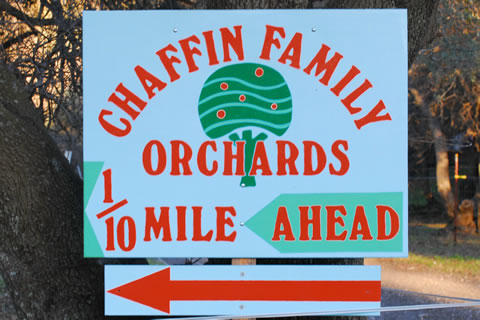
POSTSCRIPT: Help and knowledge in this crazy little endeavor of mine also came from the owner and operator of Chaffin Family Orchards located just north of Oroville. A.L. Chaffin is also mentioned in the 1963 Avocado Yearbook report. Chaffin Family Orchards has the only known grove of Duke trees, which are related to the original Duke. The farm sells freshly harvested Dukes at farmers markets in Chico, Oroville and elsewhere during the months of September and October. The farm will also fulfill special shipment orders and also offers family tours.

Find a followup to the Duke Avocado adventure posted here.