|
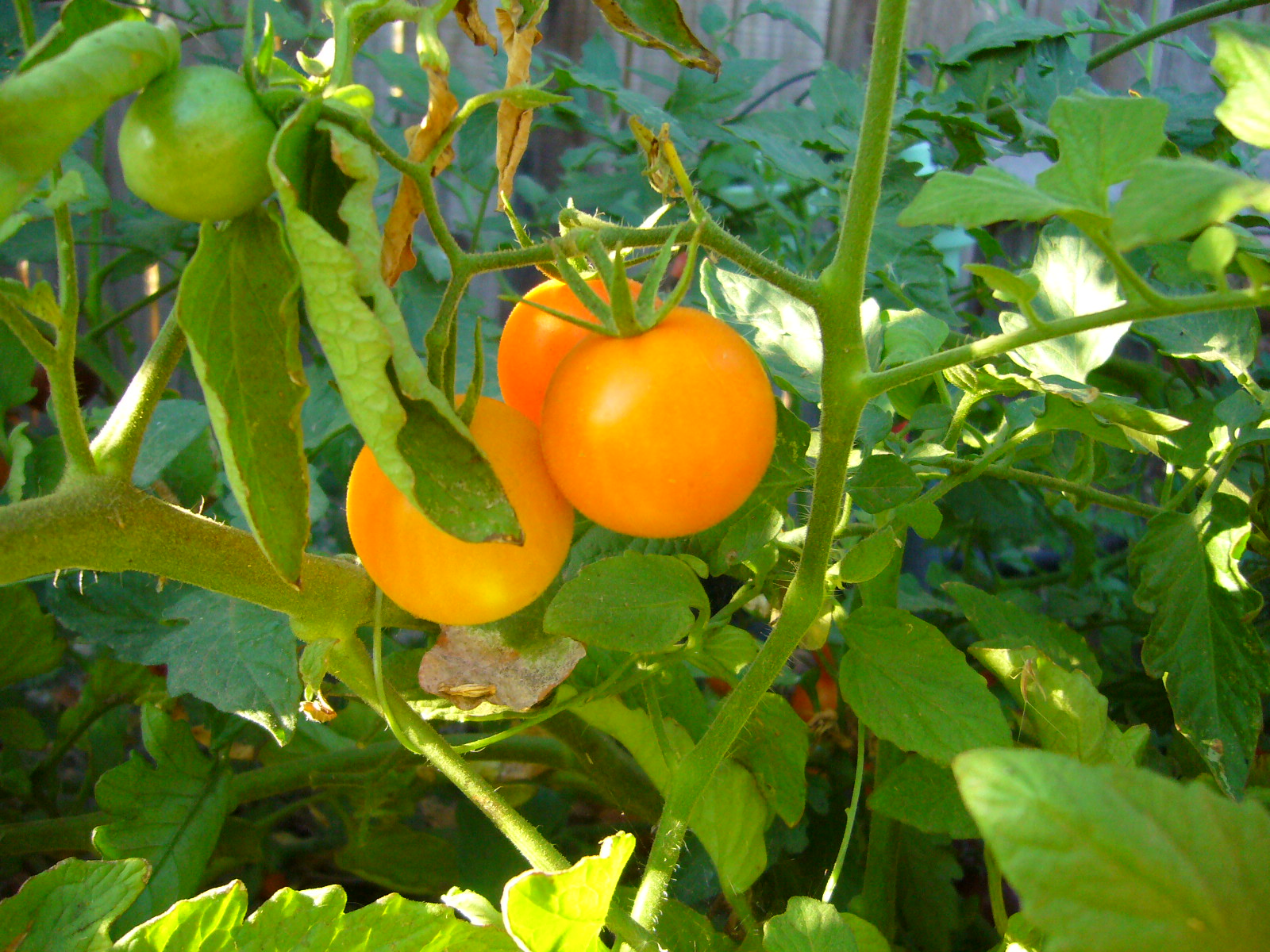
| Vine Ripening Stupice Tomatoes |
It's getting to be that time of year where things really start to pop in the Bird Summer Vegetable Garden. That long awaited garden harvest is starting. And that most treasured of summer crops, heirloom tomatoes, are slowly beginning to ripen up.
Venus and I actually started snacking on a few of them a couple of weeks back. The Czech variety known as Stupice (pronounced "Stoo-Pee-Chay" or "Stu-Pick," take your pick) is once again producing tomatoes at a prolific rate. I profiled this variety last year (Stupice is as Stupice Does) and not much has changed really. It is, once again, growing at a rather prolific rate and setting golf-ball sized tomatoes in bunches of three to seven in a raised bed that holds seven other plants.
 |
| Where Did That Lemon Boy Come From? |
I sometimes wonder how I ever did without this wonderful variety. If you're looking for a tomato plant that you can't possibly screw up, or is guaranteed to produce, Stupice is your girl.
It is getting to be the time of year, however, when the garden begins to reveal little surprises here and there that you were not expecting. One of those surprises came just last night. As we were strolling through the garden in the fading daylight, I made the observation that it was going to be rather difficult to spot ripened tomatoes in one particular bed because it was flush with green growth.
 |
| Fat Shady Lady Production |
As I got on one knee to inspect this bed, there was that rather familiar jolt of yellow joy. Through the darkened green leaves of numerous plants, there sat two baseball sized, yellow, vine-ripened Lemon Boy tomatoes. That's like hitting the lottery for gardeners, my friends. There's nothing more scrumptious than a vine-ripened Lemon Boy tomato. That yellow color holds the promise of a sweet, sour and tangy surprise for supper that you were not expecting.
Combined with a handful of bright red Stupice tomatoes and raw green zucchini? You've got a meal fit for King and Queen my friends. The wife that is Venus and I like to mix it all up with some red wine vinegar, a drop or two of olive oil, cracked salt and pepper, plus fresh oregano. I don't know why I've made the mistake of cooking zucchini all these years. It's much better raw off the bush, sort of like the way that one would enjoy a sliced cucumber.
 |
| The Indigo Rose Tomato |
I would have taken a picture of this production, but it didn't last. It was, as they say, "Gone in Sixty Seconds."
I do enjoy inspection time in the garden. It's that time of year now where this annual walk yields daily surprises. A lot can change over the course of 24-hours. There are new tomatoes here. That plant over there looks like it grew a foot overnight. Is that Indigo Rose ripe yet? Is it ever going to ripen? Where did all those Brandywine tomatoes come from?
The Indigo Rose is one of the newer and more exciting introductions to the Bird Back 40 this year. It's anything but an heirloom. I like to call it the world's first "designer tomato." Developed a few years ago at Oregon State University, the Indigo Rose is the first, perfect, Deep Purple tomato. It looks nothing like a tomato should, yet it is a tomato. While not uniformly purple, this variety will ripen when the bottom of the fruit turns red and the shoulders turn from a shiny to dull color.
 |
| World's First "Designer Tomato?" |
Much like the Stupice, the Indigo Rose sets anywhere from three to seven tomatoes per bunch and is growing at a rather eye-popping rate. Much like an heirloom, the Indigo Rose is open-pollinated. This means it won't develop one crop and quit. It will continue to grow and set tomatoes through the summer months, and deliver a whopper of a harvest.
Now who is going to complain about that? Buehler?
I must admit not everything has been "peachy keen" in the garden this year. The whitefly infestation was especially heavy this year, which may be due to the fact that the commercial growers nearby converted those vast, open fields nearby into rice production once again. It's the first time in five years that these fields have been put into rice production, and while the vast open stretches of water are a pleasure to look at, it could be the reason why there are so many whiteflies, it looks like a bank of fog has descended.
 |
| Bird Tomato Garden in June |
Whiteflies are problematic. Whiteflies carry disease. They love to settle into fruit trees and tomato bushes. Early blight has been a problem with some plants this year, especially those heirloom varieties that don't have much resistance to it. While the infestation may be mostly gone now, the damage they cause can last for months after. When they are this thick and prolific, there is simply no getting rid of them.
But -- when it comes right down to brass taxes -- there is no such thing as the "perfect year" when it comes to gardening. There's always going to be a nagging problem here or there -- some rock thrown from an overpass that you weren't expecting to rain down and cause havoc on your windshield.

As Frank Sinatra once crooned: "That's life, that's
what people say. You're riding high in April, Shot down in May. But I know I'm
gonna change their tune, When I'm right back on top in June."
And Frankie was known to love his tomatoes...