Showing posts with label Wild Boar Farms. Show all posts

Steaks in the Summer Garden

Sunday, March 6, 2016

Heirloom Tomato Seedlings
We're planning to grow steaks in the Bird Back 40 summer garden this year. How about you? Can you spot the tiny steak starter plants in the photo to your right? They are right in front of your nose. They don't look all that special -- but come this summer -- hopefully the wife that is Venus will be digging into her favorite cut of prime rib.

How does one grow steaks in a garden you ask? Plant a moo-moo cow in the raised garden beds perchance? Set aside a portion of the Bird Back 40 for some moo-moo cows? They'd get along great with Lenny the Giant Maine Coon cat, wouldn't they? Probably not -- so perish the thought.

Steak House Hybrid Tomato Seed
No -- the steaks we're growing this year -- a first for us by the way -- are of the vegetable or fruit variety. It's called the Steak House Hybrid. It's the latest introduction from Burpee Seed, and I must warn you, it's ridiculously expensive. How expensive? Stupid expensive. As someone has to be as stupid as yours truly to lay down $7 for a packet of magic beans.

Yes -- I will admit -- I paid $7 for Burpee's latest creation. They promised a seed packet with 25 seeds. Yet -- someone has a serious math problem in that seed operation because when the package finally did arrive, it contained a total of six or seven seeds. That's right, a buck a seed. This better be worth it.

Tomato Seed Selections from Tomato Growers Supply
Burpee claims that it is. "Meet the biggest tomato ever bred," the advertising claims. "And it’s not just bigger but better. Tipping the scales at up to three lbs. plus, broad-shouldered tomato titan is bigger than Big Daddy, and loaded with true heirloom tomato flavor and head-spinning fragrance. Indeterminate plants produce gorgeous, humongous fruits."

With advertising like that, who can resist? The Steak House Hybrid is one of 40-50 varieties that we're growing from seed this year. Planted two weeks ago, most of everything has sprung to life. This includes numerous peppers, which should have been planted a month earlier, but, uh, I'm late. OK, so sue me.

Solar Flare Tomato Seed: Wild Boar Farms
Some of these varieties are new. Some are old favorites. Every tomato garden must now include a Pink Berkeley Tie Dye, the brainchild of Brad Gates of Wild Boar Farms. If that's not a gardening law, it should be.

Other old-time gardening varieties include the always amazing, but sometimes tempermental, Azochka (tastes like bacon!). Look closely and you will find a Druzba, Green Zebra, Caspian Pink and Brandywine.

Ah -- but the Steak House Hybrid isn't the only "meat" feature in this year's summer garden. And no summer garden is complete without other tasty summer vegetables. Nope -- you've got to have a patch of basil here and there. Peppers are a must. And who can forget about tasty eggplant?

Seed Starting Station
So -- it's not just steaks -- but meatballs as well. This is yet another Burpee selection -- an eggplant they like to call "Meatball." So -- what's so special about "Meatball?" I have absolutely no clue. This is the first time I've grown it.

But if you were to believe the fine folks at Burpee: "Meet the mightiest, meatiest eggplant ever. Imagine fresh, home-grown, vine-ripened MEAT! That's Meatball."

Do you believe them? Meh -- me too. We'll see what happens.

Our "seed rack" contains about 140 starter plants this year. That represents the most we've ever started from seed. Can we fit 140 starter plants into the Bird Back 40? Only if I knock down the neighbor's fence and take over his backyard -- something he probably wouldn't like.

But, starting too many plants is a tradition here. Besides, they always do find a home. If not in our garden, somewhere else. I mean, look, who can pass on a tomato named after a STEAK and even the hardiest eggplant hater would pause at something called a MEATBALL.

It's 2016 in the Bird Back 40. The carnivores are taking over.


2016 TOMATO VARIETIES (PARTIAL LIST):
Azoychka
Big Pink
Black
Black Krim
Campbell’s 1327
Carbon
Cascade Lava
Caspian Pink
Chapman
Genuine
Green Tie Dye
Green Zebra
Italian Sweet
Lemon Boy
Marisol Purple
Mint Julep
Oaxacan Jewel
Pink Berkeley Tie Dye
Pink Boar
Pork Chop
Rosalita
San Marzano
Siletz
Sky Reacher
Solar Flare
Sweet 100

2016 BASIL VARIETIES:
Dark Opal
Genovese
Large Leaf
Lemon
Siam Queen

Happy Gardening New Year!

Thursday, January 1, 2015

Good morning and welcome to 2015! Wait, the clock says 12:12 PM! Did I really sleep that long? I've got to stop watching those New Year's Eve broadcasts on Univision. That's right, I said Univision. Even though most of the programming flies right over my head (I don't speak the best Spanish), I do like the fact that they put live crews at Disneyland in Southern California to ring in the New Year.

That's much better than watching one of the major networks repeat a New York City ball drop that took place three hours earlier, don't you think? Univision also isn't afraid to highlight singers who are over the age of 30. Jeez, when did I get so old and crotchedy?

Disneyland Rings in 2015
The new year means a new start to gardening efforts. And you thought time slowed down for gardeners during those winter months? Perish the thought! Winter time is planning time. If you're into serious gardening like me and the wife that is Venus (plus countless others) -- winter is just as important as spring, summer and fall. For it's the steps we take right now that either assure our success, or spell our doom, come summertime.

So what is on Bill Bird's gardening agenda for the first day of 2015? More than one or two items actually. Here is just a smattering of some of garden planning that takes place during this non-slow period of the year.

Seeds from Lockhart Seed
SEEDS, SEEDS, SEEDS: If you grow your garden from seeds, as we do, now is the time to start ordering seeds for the coming spring and summer. My work on this front actually started weeks ago. Our first stop was to the Mother of all seed stores in the San Joaquin Valley: Lockhart Seed in Stockton. There you will find most of everything you need for a full scale garden -- but not everything.

Seed catalogs that arrive by the dozens during this time of year plus seed websites offer the selection you can't find at seed stores. Most of my heirloom tomato seed -- for example -- comes from two or three different sources. Tomato Grower's Supply offers a warehouse selection of many major heirloom and hybrid tomato offerings. I'm also a fan of the breeding efforts of Bradley Gates, who runs Wild Boar Farms in the heart of the Napa Valley.

Tomato Selections from Wild Boar Farms
The Gates operation doesn't offer heirlooms. But he does offer selections that he's created on his own -- such as the Pink Berkeley Tie Dye and Cascade Lava. Other seeds come from other gardeners who save seed from the particular plants they liked in 2014. This is how I obtained seeds for the Ukrainian Heart tomato. They came as a trade that I engineered with Davis gardener and California Rare Fruit Grower (CRFG) member Marta Matvienko. Marta send me seeds for Ukrainian Heart. In return, I sent her seeds for Black Cherry -- a volunteer that sprang from the garden last year.

I also owe Marta a smattering of Blue Lake Pole Bean Seeds. Why? Because I was dumb enough to buy a pound of these seeds from Lockhart Seed. And I won't be planting a pound of pole bean seeds. Ever.

Ordering seeds is also the first step in the process. Tomato fanatics like me and the wife that is Venus will start planting these seeds indoors starting in February. Seed starting efforts for hot peppers, like the Ghost pepper for example, start even earlier. Some people have already started seeds for the Ghost and Scorpion peppers. This is because these types of varieties demand long growing seasons. Starting hot peppers in January means a nice harvest in July or August -- right when the tomatoes ripen.

Salsa anyone?

FRUIT TREES: The next two months are premium months for bare root fruit tree season. Major fruit tree suppliers like Dave Wilson Nursery in Hickman are already in the process of shipping tens of thousands of every fruit tree variety you can possible imagine to nurseries all over the West Coast and elsewhere. I'm not sure how big the DWN footprint actually is (I've never asked). But since they are the primary supplier for all things pluot, plumcot and other recent fruit tree introductions, I can imagine they get a lot of business.

And you thought Christmas season was busy?

One of my favorite activities is to browse the fruit tree selections on the DWN website. There you will find photos and entries about every fruit tree they offer. Not sure if you want a plum or a pluot? Torn between apples and apricots? Should it be a pear or a pomegranate? The DWN website, plus planting recommendations might answer some of those nagging doubts.

And there's nothing like a bit of fresh fruit pulled from a backyard or front yard tree during the summer. Bare root season is also the best time for planting because there's not as much stress placed on the tree as it's hauled from nursery site to that premium spot you've picked out for it in your yard.

Flavor Finale Pluot Tree in Winter
FRUIT TREE CARE: Now that the leaves are off the multitude of fruit trees I have scattered about the Bird Back 40 -- it's time to start thinking about winter care to prevent spring problems. There's a lot to worry about -- from peach leaf curl to the dreaded fire blight. Spraying early for insect control might erase or even lessen the expected bug invasion during the spring and summer.

I've come to discover that there's a particular bug that enjoys my Flavor Finale pluot tree as much as I do. If I fail to do anything to control it -- this invading army will infect and destroy every leaf on the tree. The most effective control I've found against this bug is to treat the tree once in the winter and again in the spring -- AFTER it has stopped flowering (we don't want to be spraying the helpful pollinators -- now do we?).

Grapevines in Need of a Haircut
Winter time is also pruning time -- especially for items such as wine or table grapes or fruit trees planted together in a Backyard Orchard Culture setting. Some fruit trees -- like the Granny Smith apple for example -- need a little "convincing" to enter that needed winter slumber. While many apple tree selections gladly shed every last leaf during the first blast of arctic weather -- the Granny stubbornly holds out like a petulant child who isn't quite ready for bedtime.

So how does one "convince" a Granny Smith apple tree to shed every last leaf? Yell at it? Call it bad names? Insult it? No, nothing that dire. Simply put on your winter gardening gloves and pick every last leaf off. Granny will get the message.

Finally -- winter time is a perfect time for fruit tree GRAFTING. This is why many CRFG Chapters hold scion exchanges during the months of January and February. The Sacramento Chapter is no different. This year's scion exchange will take place on Sunday, January 18 from 10:00 to 1:00 at La Sierra Community Center (5325 Engle Rd., Carmichael 95608).

And here you thought winter time was a "slow time" for us gardening fanatics. I'm tired already!

Fish + HH = AMF X Kitchen Sink = FAIL!

Sunday, May 25, 2014

And they're Off!
Follow closely now children -- because the title of this article is the mathematical equation we followed earlier this spring when planting the heirloom tomato crop now growing, and growing quickly I might add, in the Bird Back 40. Fresh off last year's season where each tomato plant got a fish head, two aspirins plus bone meal in each planting hole, we redoubled our efforts in 2014.

My friends, I'm here today to tell you this. Despite those lovely looking plants pictured above right, you can "love" your tomato starter plants just a little bit too much. You can go overboard on even the most organic of treatment -- and I know this from experience. Because it's taken time, patience and a bit of replanting to get our starter plants to look THIS good at this point in May.

Adding Fish Parts to Holes for Tomato Plants
Plus -- several people who ignored frost concerns and warnings and planted in March are WAY ahead of us. In the words of the immortal Tom Petty, "you got lucky, babe." Because planting in March can sometimes result in misery in April, especially if the weather turns cold again. This year, it didn't. Oh sure, it cooled down a bit here and there and actually rained a bit. But it wasn't enough to knock off March planting efforts. And for those people who rolled the dice and planted in March, they'll be harvesting a bundle of fresh tomatoes in June and laughing at the rest of us who waited until the first weekend of May.

Edit: We normally plant on or around the birthday of Farmer Fred Hoffman of "Get Growing with Farmer Fred" fame. That's usually the last weekend of April. But it was raining that weekend so we pulled a bundle of weeds instead. Anyone who gardens will tell you there's always a weed or one thousand to pull. It just comes with the territory.

But -- I digress.

Let the Planting Commence!
Fresh off a fantastically productive and surprising tomato year in 2013, we once again called on the Goddess of Love Apple Farms fame to help us with our tomato planting efforts in 2014. This time Sara and the wife that is Venus armed themselves with two buckets of smelly fish parts instead of just one, aspirin for the planting holes, organic bone meal and a few other "additives."

Here is what this year's brew contained:

1 can of water soluble Mycorrhizae and Bacteria
1 bottle (300 count) aspirin
Two boxes of Granulated Humic Acids
Two 5-gallon buckets of fish heads, tails, guts, and various parts
4 bags of Bone Meal

A Garden Party?
Holes for 24 heirloom tomato plants were dug to a depth of two feet each. Into the hole went a big helping of "fish stuff," one-half cup of Humic Acids, one-half cup of bone meal and two aspirin. Tomato plants were removed from starter cups and soaked in a Mycorrhizae bath before planting. We then proceeded to fill the holes with composted soil. The official count that first weekend in May looked like this:


24 heirloom tomato plants
16 Pepper plants
4 eggplants
2 Blueberry plants LOADED with blueberries (Sharp Blue and Misty)

Notice the Dog...
Can you guess the first thing that happened after we went through all that work to plant everything into the raised beds? If you guess that the garden dog named "DIGGER" immediately tried to dig up 24 tomato plants in a quest to munch on some smelly fish parts, you wouldn't be half wrong. If you also guessed that many of the tomato plants suddenly seized up and died, you'd also be right on the money.

Both actually happened. What the dog didn't dig up and kill in the process, died on its own. Why? Because we gave our starter plants a bit too much love. There is such a thing such as too much love. And if you follow the witch's brew I've outlined above, you too can KILL your share of tomato plants.

Janet's Jacinthe Jewel
Thank goodness the wife that is Venus and I decided to plant two cups of each tomato variety. Those replacement plants came in handy. Instead of giving them away to family and friends as we've done in the past, we were doing quite a bit of "replacement planting," while muttering the words: "NEVER AGAIN!"

However, we seem to be past the worst of it. And, I'll be honest, not every plant seized up and died on us, nor did DIGGER dig it up. For those that survived the harrowing plant-out process, I'll be honest, they look GOOD. Not just good, good, mind you. But, REAL GOOD! This includes a number of varieties from Wild Boar Farms, including a new offering this year called Janet's Jacinthe Jewel.

Pepper and Basil Starter Plants
Described as a large bright orange (jacinthe) striped beefsteak, this is a potato-leafed variety that is off to an eye-popping start and seems destined to deliver a boatload of tomatoes, many in the one pound range. And this is a bad thing? I think not!

The onset of hot weather in May has also given our tomato plantings a boost. Our once "leggy" starters now feature thick stems and are flowering heavy. We also decided to devote more room to our tomato plantings, because there can never be a thing such as "too many tomatoes." If you've read this blog for any amount of time, you know this to be true.

Baby, I've Got a Headache...
Although I was not able to take part in the final plant out due to this bum wheel that keeps me confined to a walking boot (complete with a developing, continent-sized, blister), Venus sprinkled liberal amounts of leftover tomato plants to the in-ground test bed and other spots here and there in the Bird Back 40 that offered a bit of planting space. The final count is 39 plants -- about ten to 12 more than we normally plant during the summer season.

I'm pleased to report that everything the green-thumbed wife planted is now popping out of the ground at an accelerated rate -- this includes various garden seeds that she planted here and there. That list includes five varieties of carrots, six varieties of basil, four varieties of slicing cucumbers, three varieties of pickling cucumbers green onions, bush beans, squash, pumpkins and probably five to ten other things that I've forgotten.

There comes a point in the season that when it's time to pay a trip to the Farmer's Market? We head straight for the Bird Back 40...

A Ghost Rises

Sunday, March 2, 2014

The Ghost Rises
There's something mighty special taking place in one corner of the North Natomas heirloom tomato farm extravaganza belonging to yours truly -- and the wife that is Venus. Plants are just popping out all over in anticipating of the onset of spring -- and that includes the Bird 2014 heirloom tomato and pepper summer garden.
 
The most interesting item to emerge this morning? That would be it -- pictured above right. That, my fine gardening friends, represents a first for the Birdhouse. It is truly something special. It's called the Ghost Pepper -- and it's become a somewhat special and legendary ingredient in the moderately-famous and always in demand Roasted Garlic, Pepper and Heirloom Tomato Salsa.
 
Ghost Pepper Seeds
The Ghost pepper -- my friends -- is a hands down winner. But I don't recommend that you sample one fresh from the garden. That might cause a bit of indigestive pain -- if you get my drift.
 
You see -- the Ghost Pepper -- also known as Bhut Jolokia -- is a rather warm pepper. I say this facetiously. The Ghost Pepper was once know as the hottest pepper on the planet, bar none. It's since been surpassed by others -- but that Scoville unit rating of one million is still nothing to be laughed at. The Ghost Pepper produces a taste that is so stinging hot, that it rates just a notch below standard police-grade pepper spray.
 
Bird 2014 Summer Garden under Shop Lights
None of this matters to the wife that is Venus. Once she discovered my plans to grow the Bhut Jolokia in the Bird Back 40, it's been "GAME ON." You see, the correct pronunciation of this pepper might be something akin to "Boot Holoka," but when it comes to the Bhut Jolokia the wife that is Venus suddenly reverts to the tender age of ten.
 
Which means I become the "Bhut" of all jokes. Bhut Jolokia has suddenly become my second name. Or, if I'm doing something to annoy her (which is quite often), I am nothing more than a "Bhut Jolokia."
 
Pick a Peck of Peppers
We were warned -- before planting our pepper and tomato seeds two weekends ago -- that the Ghost Pepper could take a rather long time to germinate and emerge from the soil. Germination can sometimes take up to a month. But this morning -- barely two weeks after planting -- the first Ghost Pepper seedling emerged. I'm sure it will be followed by others.
 
The emergence of the Bhut Jolokia actually beat out a few other pepper varieties -- which concerns me a tad. We didn't buy any pepper seeds this year -- other than the Bhut Jolokia of course -- because the gardening seed box (a repurposed box that once held a pair of size 13 sneakers) is jammed with pepper seed purchases made in previous years. Planting pepper seeds that are more than two or three years old is akin to rolling a pair of dice. Sometimes it comes up sixes. And sometimes it's snake eyes -- as in no germination at all.
 
Venus Plants Tomato Seeds
The Ghost Pepper has another thing going for it. Unlike our previous experience with other hot peppers -- the Bhut Jolokia does not lose its mega-byte of hotness after cooking for a solid hour or processing in a pressure canner for 30 minutes. We experimented with this pepper quite a bit last year, thanks to the generous donations of South Natomas gardener Nels Christensen.
 
The last experiment turned out to be the best: Four Ghost Peppers in a batch of salsa that resulted in eleven one-pint jars. Named "Ghost to the Post" in honor of former Oakland Raiders tight end Dave Casper (and the Ghost Pepper, of course), these eleven jars resulted in the best salsa we've ever created in the Bird family kitchen. Finally, after years of trial and many errors, we've produced something with a real kick.
 
Grow! Grow! Grow!
I look forward to this summer when we can hopefully combine ripened, red hot Ghost Peppers with the fine tomato selections offered by Brad Gates and his Wild Boar Farms. Peppers -- especially hot peppers -- are an essential ingredient in not just salsa -- but the many brands of tomato sauce that we create and can for winter use. Why confine yourself to a store purchase of tomato sauce mixed with one kind of pepper and one kind of basil -- when you can have six?
 
And so my friends, while I do recommend the Bhut Jolokia for your backyard pleasure, I also preach caution. Because this pepper has a real bite and kick to it. Treat it with the respect and care it deserves. Because if you're not careful, the Ghost Pepper just might kick you square in the Bhut.

The SECRET is OUT!

Saturday, December 14, 2013

Order Form: Wild Boar Farms
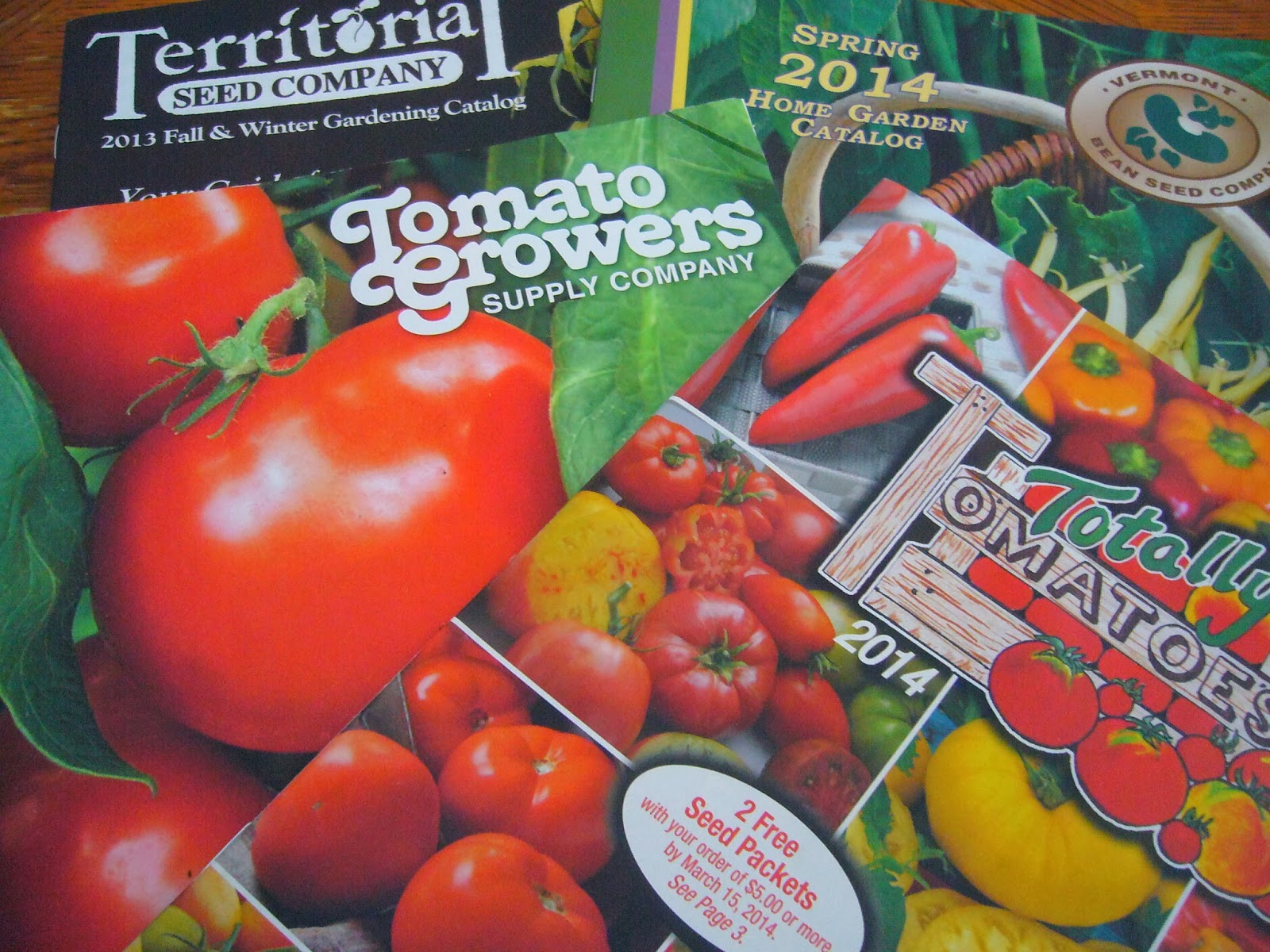
Uh oh. There's no hiding it now. As soon as I saw the back page of this year's Totally Tomatoes catalog, I got that sinking feeling in my gut. Tomato nerds like me know all too well what's on the back page of that catalog. Uh huh. That's right. Our little tomato secret is close to no longer being a secret. The Wild Boar series of striped tomatoes from Wild Boar Farms in Napa Valley just hit the mainstream big-time.

That's why I secretly placed my order this morning. Heh! Better get while the getting is good! There's no telling when they might run out of tomato seed for the lip-smacking Berkeley Pink Tie-Dye, or the absolutely LUSCIOUS Pork Chop. And yes, they do run out. The man behind the Wild Boar collection of fantastic tomatoes, Bradley Gates, is no longer a tomato grower's best kept secret.

Wild Boar Collection: Totally Tomatoes
Bradley doesn't just grow our favorite types of heirloom tomatoes, although he does offer a few. What he does offer, however, is somewhat better. These are his own creations: Solar Flare, Cascade Lava, Red Furry Boar, Lush Queen are all hand-crafted creations out of the Gates garden. What makes them so special is they are absolutely the best tasting tomatoes I've ever had the pleasure of tasting. And I've tasted my share, people. Trust me on this. Gates has hit on something big -- and the sky's the limit for his ever-expanding operation.

It's not just the taste of these tomatoes. Production figures into the equation just as well -- as does disease resistance. I took a chance last year and ordered four different varieties from Wild Boar Farms. Three of those selections: Lush Queen, Solar Flare and Pork Chop were among the biggest producers in last year's Bird Back 40 tomato garden. The wife that is Venus knows this all too well. Based upon last year's results? I'm doubling my order for 2014.

2013 Whole Tomato Canning Efforts (Partial)
It got to the point during last year's harvest season, where Venus could actually choose the kinds of colors she wanted in each one-quart jar of whole, canned tomatoes. Some jars were all red. Still others were all yellow. And yes, one or two or even three more went straight pink. That's because we literally had so much to choose from that we could "pick and choose" to our heart's delight.

This, by the way, has never happened during previous gardening years. In previous gardening years? Everything we harvested, no matter what the color, got added to those one-quart jars. But last year's gardening efforts produced such a payoff, that just one days worth of canning whole tomatoes provided enough jars to last us and one or two other families with enough tomatoes to last through the entire winter.

Call me: PRODUCTION
Know what that's called? That's called production, my friends. And it's why the Birds are handing out jars of salsa and special tomato sauce blends for Christmas this year. Because you haven't truly savored the flavor of tomato sauce, until you've prepared a meal with herbed sauce or a distinct Italian blend. In other words, why have a bland sauce with one type of basil, when you can spice it up with six blends of basil?

The tomato nerds over at all things tomatoes, a gathering spot called TomatoMania, have been whispering about Bradley's exploits and offerings for more than a few years. But I didn't get around to actually ordering anything from Wild Boar Farms until last winter. And it wouldn't be until late June or mid-July did I finally get to harvest some of these special offerings.

Solar Flare Tomato
I'll never forget that first taste of the very first, vine-ripened, Solar Flare. In a word? Scrumptious.

If you take the time to visit the Wild Boar Farms website, you'll find yourself in a world of striped tomatoes. There is no one, dominant color here. There's yellow streaked with white, red streaked with green and orange, orange streaked with yellow and just about every color found in a rainbow. The descriptions for each tomato are almost as entertaining as the colors. For instance? The Berkeley Tie-Dye carries the following warning: "High Acid Content May Cause Flashbacks."

It appears they have a sense of humor to go along with the ability to grow those great tasting tomatoes.

Garden Pornography
So, tomato lovers, as you gather your gardening porn together that recently arrived in the mail, and start to make those vegetable growing decisions for the 2014 garden, don't forget to pay Wild Boar Farms a visit. Because if there's room for a Brandywine or a Martha Washington in next year's tomato garden, you might also find a spot for the Pineapple Pig or the Golden Gates.

You have been warned.